
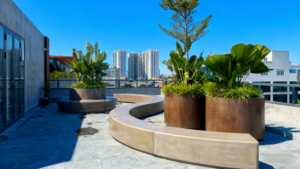
Large Outdoor Planters Buying Guide
In large-scale landscape architecture and urban planning, a planter is never “just a pot.” It is a structural element that must harmonize with architectural vision while enduring the rigors of public use and environmental extremes. For professionals—landscape architects, developers, and facility managers—choosing the right large outdoor planter involves a complex calculation of structural loading, material longevity, and aesthetic versatility. While traditional materials like stone, timber, or standard precast concrete have their place, Glass Fiber Reinforced Concrete (GRC/GFRC) has emerged as the definitive solution for high-specification projects. This guide explores the technical and economic factors that make GRC the preferred choice for modern infrastructure. 1. Structural Integrity vs. Weight: The GRC Advantage One of the most significant challenges in modern urban design, particularly for rooftop gardens and elevated podiums, is weight. Traditional precast concrete planters are exceptionally heavy, often requiring additional structural reinforcement of the building itself, which drives up total project costs.