Buying Guide
Selecting the Ideal Architectural Materials for Modern Curtain Wall Systems
Discover how modern cladding materials balance weight, thermal efficiency, and design to optimize high-performance curtain wall systems.
Discover how modern cladding materials balance weight, thermal efficiency, and design to optimize high-performance curtain wall systems.
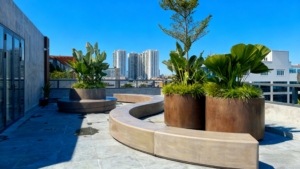
Discover how Glass Fiber Reinforced Concrete (GRC) outdoor planters balance structural integrity, reduced dead load, and aesthetic versatility for modern projects…
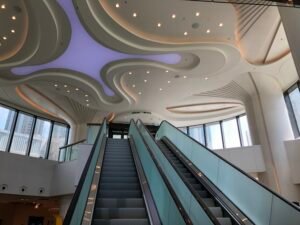
In modern architecture and interior design, ceiling design is often overlooked, yet it remains a crucial element in defining a space’s ambiance. Whether for commercial projects or residential designs…
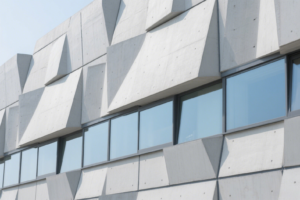
Glass Fiber Reinforced Concrete (GRC), also known as GFRC, has become one of the most versatile and innovative materials in the construction industry. Its strength, light weight, and ability to…
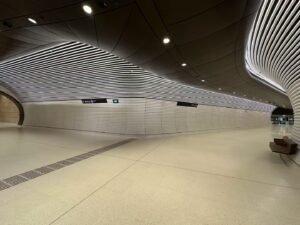
In modern architectural and construction, material selection is a crucial step that directly influences the performance, aesthetics, and long-term value of a project. Among the various materials available, Glassfiber Reinforced Concrete (GRC) and Terracotta are two that stand out due to their long histories and wide-ranging applications. While both are used for architectural panels, planters, decorative elements, and landscape furniture, they differ significantly in their composition, fabrication, and properties. This article presents a detailed comparison between GRC and Terracotta to support architects, landscape designers, and developers in choosing the right material for their design objectives. Material Composition and Manufacturing Techniques GRC, or Glassfiber Reinforced Concrete, is a modern composite material made from cement, fine sand, water, polymers, and alkali-resistant glass fibers. These fibers play a critical role in reinforcing the concrete matrix, significantly enhancing tensile and flexural strength without increasing weight. GRC components are produced using methods such as: Spray-up:

In the ever-evolving landscape of architecture and design, Glass Fiber Reinforced Concrete (GRC) has revolutionized the way we approach outdoor spaces. Known for its exceptional versatility, durability, and aesthetic range, GRC is rapidly becoming the material of choice for landscaping and architectural projects worldwide. As demand for GRC grows, China has emerged as the ultimate source for high-quality, cost-effective materials that drive innovation. Let’s explore why China is the go-to destination for sourcing GRC, how to find the right suppliers, and how to navigate the logistics of international trade seamlessly. Why choose China as the Construction Material Supplier? 1. Unbeatable Cost Efficiency China’s powerful manufacturing impresses the whole world. With state-of-the-art production facilities and a deep understanding of economies of scale, Chinese manufacturers can offer GRC products at a fraction of the cost found in other regions—without compromising on quality. This price advantage makes China a highly attractive option for businesses

With the growing demand for GFRC products, there has been an increased focus on manufacturing this high-performance concrete, especially with its many applications across construction projects. This material can be utilized anywhere, thanks to its great improvement in concrete properties, like tensile strength, durability, shrinkage, impact, and erosion resistance. In fact, with its lightweight and durability, it can be moulded into any shape you can think of, with the color and texture you want. Today, GFRC is mainly used in exterior building façade panels and as architectural precast concrete. With its flexural strength compared to conventional unreinforced concrete, it is no surprise that many opt for GFRC for their architectural projects. That said, it cannot be denied that the GFRC business has grown incredibly in the past few years. Hence, many are looking for the best GFRC manufacturers, like in Pakistan. And lucky for you, we have a list of

Glass Fiber Reinforced Gypsum (GFRG) is a remarkable construction material that seamlessly blends the strength of glass fibers with the versatility of gypsum, offering a unique solution for modern architectural and construction projects. In this article, we will delve into the fabrication process, applications, mechanical properties, advantages, quality assurance, and characteristic property testing of GFRG. Fabrication of GFRG GFRG is created by combining gypsum, water, and glass fibers. The fabrication process involves impregnating glass fibers into a gypsum slurry, which is then cast into desired shapes and sizes. The mixture is then allowed to harden and cure, resulting in GFRG panels that possess remarkable structural integrity and aesthetic appeal. The combination of gypsum and glass fibers allows for the creation of lightweight and strong panels suitable for various applications. Applications of GFRG GFRG panels have found a multitude of applications in the construction industry due to their unique properties. Some

More and more are now opting to use GFRC for their architectural projects thanks to its toughness, tensile strength, and flexibility, making it a great concrete alternative. You can produce several materials using GFRC, from facades to grills, column cladding, capitals, brackets, keystone, windowsill and door surround, cornices, ac cover, planters, landscaping items, and more. The possibilities are endless. This material also comes with a number of benefits, like its being weather, corrosion, fire, abrasion, and fungi resistant. It is non-combustible, easy to handle, transport, and install, environmentally friendly, mouldable, and more. Price-wise, GFRC promise to give value to your money. Its sustainable products feature low life cycle costs, making it economical compared to conventional cement concrete products. As it is cut into thinner sections, its price per square foot is less than that of traditional cement. These things and more make GFRC sought-after. Hence, many are looking for the

GFRC has already become one of the most popular forms of concrete, taking the construction world by storm all over the globe. As it has seen a significant improvement compared to traditional concrete, this material has continuously replaced its use in several architectural projects. Well, it is easy to see why. This concrete alternative is much lighter. It is 50% less weight than other masonry materials. It also features a high strength-to-weight ratio, making it cost-effective for higher-elevation uses. In addition to that, it is more affordable to use and can be applied anywhere. And to convince you more of its limitless usage, you can use GFRC in concrete countertops, wall panels, concrete dining tables, fireplace surrounds, and outdoor furniture. That said, it is no surprise that GFRC products are widely used in Vietnam. So, if you are looking for the best GFRC manufacturers in the country, you come to