
Blog

Industry Knowledge

What Made GRC So Popular in Modern Building Facades?

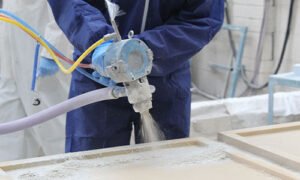
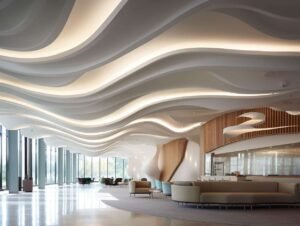
Modern facades have to do more than make a building look attractive. They must manage structural loads, changing weather, fire-safety requirements, installation schedules, architectural details, and long-term maintenance. At the same time, architects increasingly want curved surfaces, deep reveals, textured finishes, and large custom components. That combination of technical and aesthetic demands helps explain why GRC facade panels have become so widely used. GRC gives project teams the appearance and solidity of a cement-based material without requiring the mass of conventional precast concrete. Manufacturers can form it into thin, lightweight panels with complex shapes and a wide variety of finishes. For facade subcontractors, this can make ambitious architectural concepts more practical to manufacture, transport, and install. Here are eight important reasons GRC has become a prominent material for modern building facades. What Is GRC? GRC stands for glassfiber reinforced concrete. In the United States, the material is more commonly called

Read More »
Industry Knowledge

Custom GFRC Cornice: Benefits, Manufacturing Process and Project Considerations

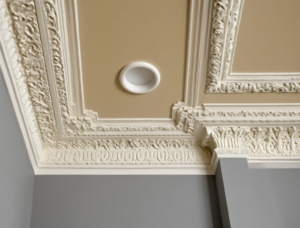
Custom GFRC Cornice: Benefits, Manufacturing Process and Project Considerations Cornices do more than complete the edge of a building. They create shadow lines, define architectural proportions and connect façades, columns and rooflines into one coherent design. The challenge begins when a project requires large profiles, deep projections or detailed classical ornamentation. Natural stone and conventional precast concrete can become heavy and difficult to handle. Forming complex details on-site may also increase labour requirements and make quality harder to control. Custom GFRC cornice offers another approach. It allows contractors and designers to reproduce intricate architectural profiles as relatively thin, factory-made components. These components can then arrive on-site ready for coordinated installation. For hotel, commercial, residential and cultural projects, this combination may help balance architectural expression with practical construction requirements. What Is a GFRC Cornice? GFRC stands for glass fibre reinforced concrete. It is also called GRC, particularly in the United Kingdom,

Read More »
Industry Knowledge

The Role of Glass Fiber in GRC: Enhancing Durability, Precision, and Quality Control

Why Glass Fiber Matters in GRC Glass Fiber Reinforced Concrete (GRC or GFRC) is an advanced composite material widely used in architecture, landscaping, and urban furniture. Its performance relies heavily on alkali-resistant (AR) glass fiber, which gives GRC its characteristic balance of flexibility, durability, and formability. By using the right type and dosage of glass fiber, manufacturers ensure that products like GRC planters, cladding panels, and outdoor furniture meet strict mechanical and aesthetic standards. Durability in Outdoor Environments AR glass fiber resists corrosion in cement’s alkaline environment, providing long-term structural integrity even under: Intense UV radiation, Wet/dry cycles, snow, and freeze-thaw conditions, Aggressive urban or marine environments. This makes GRC a reliable, low-maintenance material for long-lasting outdoor installations. Why Alkali-Resistant (AR) Glass Fiber Is Essential -Resistance to Cement Chemistry AR glass fiber is engineered with high zirconia content (≥16.5%) to withstand the high alkalinity of cement paste. Without this, ordinary

Read More »
Industry Knowledge

Optimizing GRG (Glass Fiber Reinforced Gypsum) Applications: Packaging and Delivery Guidelines

Introduction to GRG Glass Fiber Reinforced Gypsum (GFRG or GRG) is an advanced material known for its strength, durability, and versatility. Made by reinforcing high-strength alpha gypsum with glass fibers, GRG can be molded into nearly any shape or size, making it ideal for interior or sheltered areas. As a non-combustible material with excellent flame spread and smoke development ratings (per ASTM E-84), GRG is lighter and stronger than traditional plaster castings, weighing only 2-3 pounds per square foot (10-15 kg/m²). These characteristics, combined with its use of post-consumer recycled materials and minimized framing requirements, make GRG a preferred choice for sustainable construction projects. Proper handling, packaging, and delivery are essential to preserving the quality and functionality of GRG products. Packaging Effective packaging ensures that GRG products maintain their integrity during storage and transportation. The following practices are recommended: Product Placement: Finished GRG items should be stored with the longer side

Read More »
Industry Knowledge

Detailed Process Specifications for GRC Mould Production: 3 Common Mould Types

GRC(Glass fiber reinforced concrete) components are made and formed in molds. Many products do not require model making, and molds can be made directly. However, more complex components need to make models first, and then use the models to make molds. In this article, we are going to introduce 3 common types of mould production. Silicone Mould Scope of Application:Applicable for the production of components with intricate sculptural designs, textured surfaces, or rich details where rigid moulds cannot ensure easy demoulding. Details: Fiberglass Mould Scope of Application:Suitable for creating components like door and window frames, beams, columns, or linear designs where surfaces allow for seamless demoulding. Details: Gypsum Mould Scope of Application:Used for simple designs, low production quantities, or as intermediary moulds for secondary replication. Details: Conclusion Moulds have a great impact on the quality, production cycle and cost of GRC products, and are a very important link in production.

Read More »
Industry Knowledge

How to Protect GRC Surfaces: Key Methods to Enhance Durability and Aesthetics

Glass Fiber Reinforced Concrete (GRC) has become a preferred material in architectural and landscape design due to its exceptional performance and visual appeal. However, prolonged exposure to external elements can lead to degradation, discoloration, and structural weakening. Implementing proper surface protection methods is essential to extend the lifespan of GRC, maintain its appearance, and minimize maintenance costs. This article delves into the critical purposes and benefits of GRC surface protection, as well as practical strategies for achieving it. Purposes and Benefits of GRC Surface Protection Key Strategies for GRC Surface Protection The Role of Protective Agents To further enhance surface protection, osmotic or adhesive protective agents can be applied using brushing, rolling, or immersion techniques. These agents create a transparent or semi-transparent protective film and must meet the following criteria: Conclusion Surface protection is crucial to enhancing the longevity, functionality, and aesthetic value of GRC. Through strategies such as selecting high-quality

Read More »
Industry Knowledge

A Brief Overview of GRP Production Processes and Applications  

Glass Reinforced Plastic (GRP) is a lightweight, high-strength, and corrosion-resistant composite material widely used in construction, transportation, chemical, and marine industries. Its exceptional performance makes it a popular choice for various industrial applications. Depending on the product’s purpose and production requirements, different forming processes can be selected. This article provides a brief introduction to the common production processes for GRP. Lamination     The lamination method is a traditional and versatile production process. It is suitable for producing complex shapes and small-batch products, such as storage tanks, irregular shells, and small containers. This method requires minimal equipment and offers high flexibility.   Process Steps:   1. Clean the mold surface and apply a release agent.   2. Apply gel-coat and resin onto the mold surface.   3. Manually lay fiberglass mats or fabrics and saturate them with resin.   4. Use a roller to compact the layers and eliminate air bubbles.

Read More »
building, windows, skyscraper-8531835.jpg
Industry Knowledge

Several Key tests on Precasting Material materials: Interpreting material performance from professional perspective

Precasting Material has become a critical choice in modern construction due to its superior performance and wide range of applications, such as GRC, GRP, GRG and UHPC etc.. Through rigorous testing standards, we can comprehensively evaluate its essential properties, for instance compressive strength, flexural strength, and durability. These evaluations ensure reliability across various environments and provide safety assurances for engineering projects. This article introduces several major tests and explains the relevant standards in different regions.   Key Tests for Precasting Materials   Tensile and Compressive Strength Tests      Objective: To verify the performance under tensile and compressive forces, ensuring structural integrity under different loads without cracking or deforming.      Brief Testing Process: Gradually apply tensile or compressive force to the sample using a universal testing machine until the sample ruptures.   Flexural Strength Test      Objective: To assess the strength and flexibility under bending stress, demonstrating its applicability in various

Read More »

Ask For A Quick Quote

We will contact you within 1 working day, please pay attention to the email with the suffix “@constructgrc.com”

Don’t have complete drawings yet?

Just send us your preliminary requirements for a quick estimate.