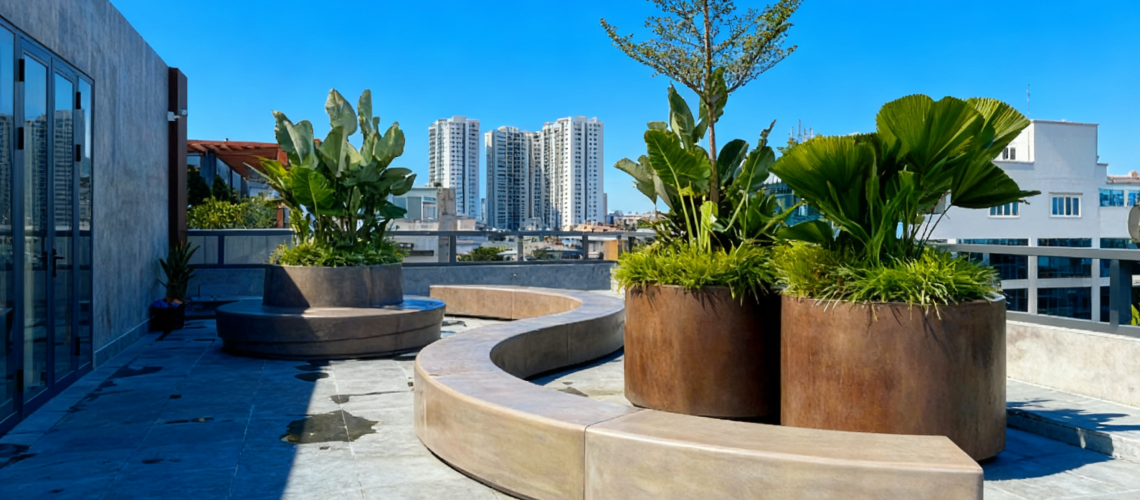
In large-scale landscape architecture and urban planning, a planter is never “just a pot.” It is a structural element that must harmonize with architectural vision while enduring the rigors of public use and environmental extremes. For professionals—landscape architects, developers, and facility managers—choosing the right large outdoor planter involves a complex calculation of structural loading, material longevity, and aesthetic versatility.
While traditional materials like stone, timber, or standard precast concrete have their place, Glass Fiber Reinforced Concrete (GRC/GFRC) has emerged as the definitive solution for high-specification projects. This guide explores the technical and economic factors that make GRC the preferred choice for modern infrastructure.
1. Structural Integrity vs. Weight: The GRC Advantage
One of the most significant challenges in modern urban design, particularly for rooftop gardens and elevated podiums, is weight. Traditional precast concrete planters are exceptionally heavy, often requiring additional structural reinforcement of the building itself, which drives up total project costs.
GRC solves this through material science. By reinforcing a high-strength cement matrix with alkali-resistant glass fibers, manufacturers can produce planters with thin walls (typically 25mm to 30mm) that possess immense tensile strength.
Technical Insight: The weight-to-strength ratio of GRC allows for a reduction in dead load by up to 45% to 60% compared to traditional solid concrete.
For a landscape architect, this means the ability to specify large outdoor planters—even those exceeding 2 or 3 meters in length—without compromising the structural integrity of the deck or necessitating cost-prohibitive structural upgrades.
2. Engineered for the Elements: Weathering and Durability
Public facilities require materials that can withstand “the worst-case scenario.” Large planters in public plazas or commercial hubs face two primary threats: environmental degradation and high-traffic wear.
Freeze-Thaw Resilience
Unlike terracotta or inferior resin-based products, GRC is virtually non-porous when correctly finished. It does not absorb significant moisture, which prevents the catastrophic cracking caused by freeze-thaw cycles in colder climates.
UV and Chemical Stability
Large-scale outdoor planters are often exposed to intense UV radiation and urban pollutants. GRC is an inorganic material; it does not “photo-degrade” or become brittle like plastics and fiberglass (FRP). Furthermore, it can be treated with anti-graffiti coatings—a critical requirement for public infrastructure—allowing for easy maintenance without damaging the planter’s surface.
3. Design Without Limits: Customization and Aesthetics
For the design professional, the “buying guide” isn’t just about durability; it’s about the aesthetic language of the project. GRC offers a level of moldability that few other heavy-duty materials can match.
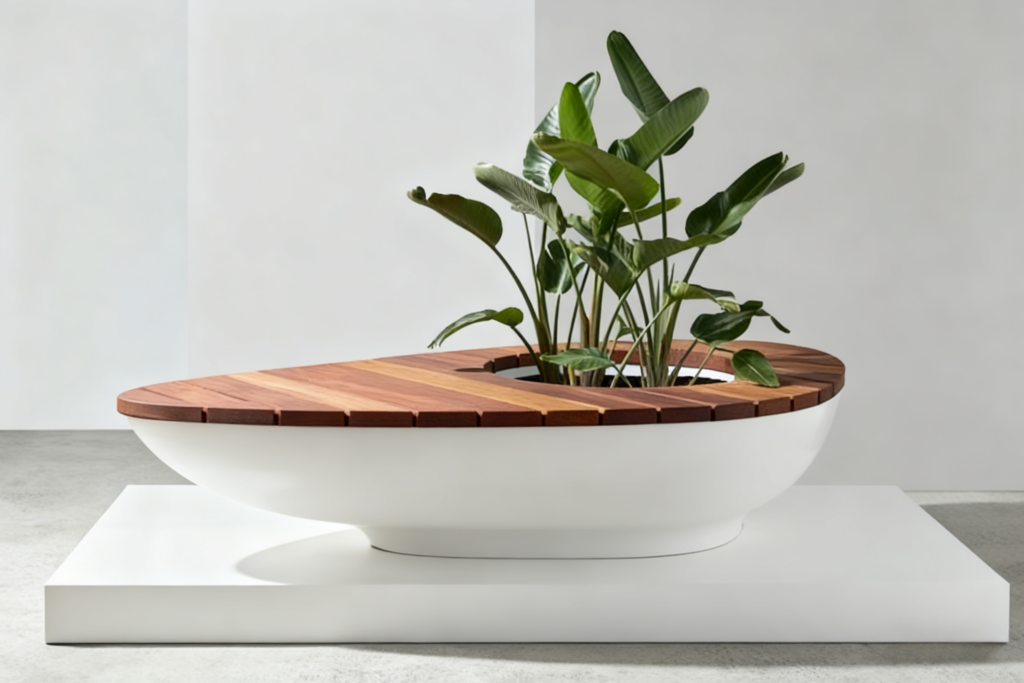
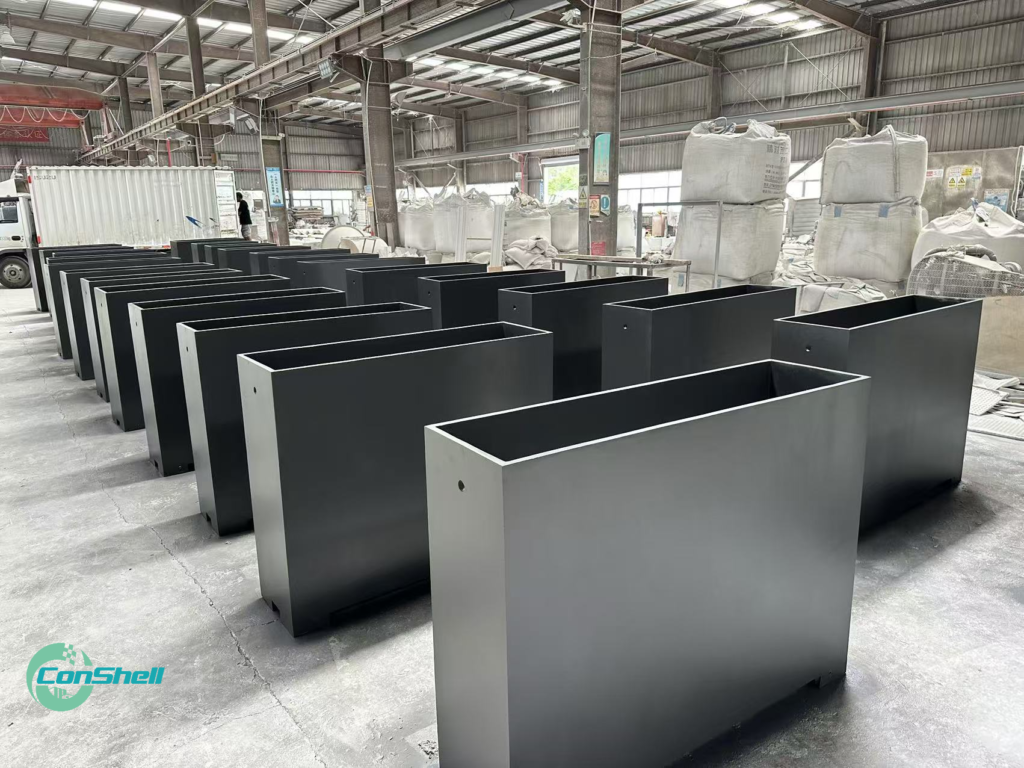
Bespoke Geometries: Whether the project calls for sharp, minimalist cuboids or organic, flowing curves, GRC can be cast into complex shapes that provide a monolithic appearance.
Surface Textures: GRC can be finished to mimic natural limestone, acid-washed granite, or even contemporary smooth-polished concrete. This allows designers to maintain a consistent material palette across a large-scale development.
Integrated Features: Large GRC planters can be engineered to include integrated seating, LED lighting channels, or internal irrigation reservoirs, turning a simple planter into a multi-functional piece of site furniture.
4. Economic ROI: Installation and Total Cost of Ownership (TCO)
While the initial procurement cost of a large outdoor GRC planter may be higher than plastic or timber alternatives, the Total Cost of Ownership (TCO) is significantly lower.
Lower Installation Costs: Because GRC is lightweight, it often eliminates the need for heavy cranes or specialized rigging teams. A smaller crew can position GRC planters faster, reducing site labor costs.
Longevity: In a commercial or municipal setting, a planter is expected to last 20+ years. GRC’s resistance to rot, rust, and impact means the replacement cycle is measured in decades, not years.
Low Maintenance: Beyond occasional cleaning, GRC requires no painting or sealing to maintain its structural properties, reducing the long-term operational budget for facility managers.
5. Specification Check-list for Professionals
When specifying large planters for your next project, ensure the following technical boxes are checked:
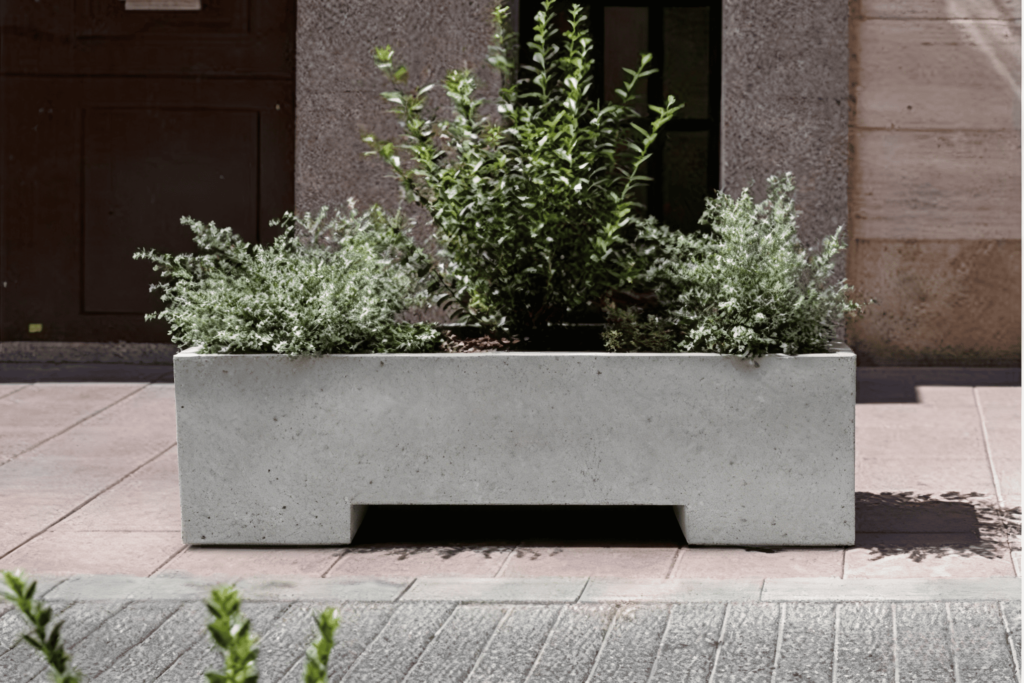
Drainage Systems: Are there pre-cast drainage holes and internal clearance for “feet” to ensure water flow?
Lifting Points: For ultra-large units, are there integrated lifting eyes for safe installation?
Load Calculations: Has the manufacturer provided the “dry weight” vs. “saturated soil weight” for your structural engineer?
Finish Consistency: Does the manufacturer guarantee color consistency across large batches?
Partner with a Global Leader: Conshell
Selecting the right partner is as critical as selecting the right material. Conshell is a premier manufacturer specializing in high-performance GRC solutions with over 25 years of expertise in the industry.
We understand the rigorous demands of landscape architects and developers because we have been there. Our history includes supplying large outdoor planters for prestigious overseas projects, ranging from luxury hotel courtyards to massive municipal transport hubs. At Conshell, we combine traditional craftsmanship with modern engineering to deliver GRC products that meet the highest international standards of durability and design.Are you planning a large-scale landscape project? Let’s bring your vision to life with precision-engineered GRC. Contact our technical team today to discuss custom specifications, request CAD drawings, or receive a comprehensive quote for your next planter box project.